Your browser is not supported. Please update it.

Uncategorised

What to look for in a booking engine

With an ever increasing number of tee times being booked online a booking engine is a basic necessity for even the smallest of golf clubs today. There is also an increasing amount of choice which is likely to grow in the coming years.

One of the first things you need to sell tee times to visitors online is a booking engine. Generally speaking the booking engine will be the same as your ‘tee sheet’, for example if you use an Intelligentgolf tee sheet, then you will have to use their booking engine BUT with the continued increase in online tee time bookings, golf clubs should pay particular attention to their booking engine and assess whether it is the right fit for them.

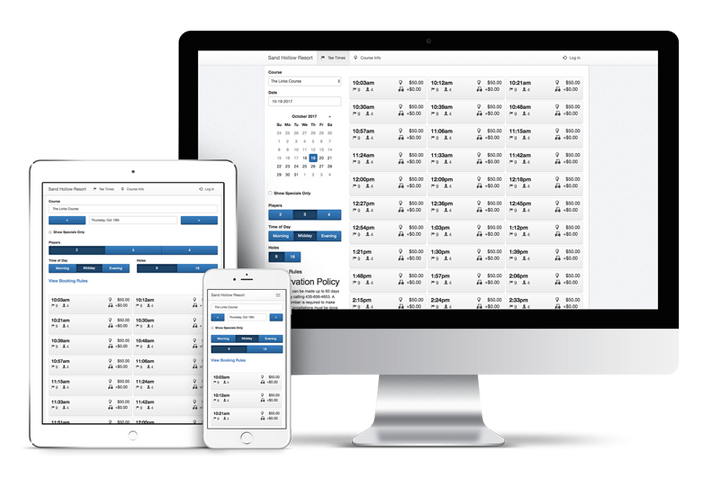
So first of all what is a booking engine? A booking engine is a software application that secures online bookings for members, visitors or both. You can have separate booking engines for members and visitors depending on your technology solution.

As useful as third parties are at publicising your golf course and selling tee times, few operators appreciate the amount of commission and/or barter tee times that can add up over time. It is surprisingly common to find a golf club who is selling tee times through the third parties, but doesn’t have the option to book directly through their own website, or if they do the customer journey is so poor that it is easier to book on a third party website.

Here is a list of things to consider when assessing which booking engine is best for you:

  • The booking engine should be flexible to fit your golf club’s needs. To figure out what these needs are look at it from a golfer’s point of view. For example, do a lot of your visitors use buggies? If so, can the booking engine manage your buggy fleet? Does your golf club create packages with food and golf? Can these be booked online and the relevant departments be informed when a booking is made? Does the booking engine support voucher code functionality so you can run targeted promotions on different marketing channels?

  • Is the booking engine compatible with mobile and social media sites? We monitor Google Analytics on the booking engines at all of our partner clubs and mobile web traffic makes up more than 50% of the total web sessions. It is absolutely essential that your booking engine works seamlessly on mobile, or you will lose bookings.

  • Your booking engine should provide you with transparent, in-depth insights into the performance of your golf course. These insights should include course utilisation, conversion rates, bookings via desktop and mobile, lead times, average group sizes and booking values. Ideally, you should be able to use your booking engine reports to identify booking patterns that will help you with your revenue and marketing strategies. As well as this, a booking engine provider should supply advice based on this data to ensure you are getting the most from the system.

  • Features to help you build a good relationship with the visiting golfer are key. Most systems allow you to send automated emails to the golfer before arrival, and after they have played. You can use these emails to understand their experience through surveys, build loyalty through re-marketing offers and increase your email database for additional promotions.

Most importantly make a list of requirements and ensure that the booking engine you choose is capable of delivering them. There is a huge opportunity for online sales to form a major part of your revenue and improve efficiencies, and the right system will go a long way to helping you achieve this.

Read more

Is ‘voice search’ here to stay

  • Nov 27, 2018  3 min read

With the rise of voice activated speakers such as Alexa, and the undeniable increase in traffic from searching via voice – Siri, Cortana, Google voice search etc. it is likely that soon you will be able to search for tee times in this way. Some experts are predicting a ‘Voice Search Revolution’, which is quickly becoming one of the most important SEO trends in 2018.

Although booking a tee time through voice search isn’t possible yet, it is important for golf clubs to consider the implications of more golfers searching by voice when assessing their SEO strategy.


  • Use conversational language: Voice search is a more natural way to interact with a search engine and users are more likely to use full sentences and questions as voice commands. Golf Clubs can incorporate conversational language by considering the questions that a golfer might ask. Once you have a list you can work on some digital content to answer these questions. Creating a page of FAQs can be a great voice search tactic.


  • Long-tail keywords are longer and more specific phrases that people use to search for information online. These phrases typically consist of four or more words, compared to shorter, high-demand phrases consisting of one or two words. People who use long-tail keywords are potentially more valuable to your business, as they know exactly what they are looking for online. In fact, long-tail keywords convert 2.5 times more frequently. Incorporating them into your digital strategy can help you succeed in voice search, as they better represent how people behave online.


  • An estimated 22% of people using voice search are looking for local content and information. Therefore, it is essential to implement local SEO best practices. Firstly, you should claim your Google MyBusiness listing. Optimising your Google MyBusiness profile allows people to find information about your business such as address, telephone number, opening hours and more. Ensuring that your listing is claimed and up to date can increase your chances of appearing in local search results.


  • Perhaps one of the most significant digital trends is the continued growth of mobile. As mobile device technology advances, user adoption of digital assistants such as Apple’s Siri also increases. Interestingly, 20% of mobile queries are now made via voice search applications. Therefore, golf clubs should ensure that their website, ad campaigns and any other digital channels are fully optimised for mobile.

In conclusion voice search will undeniably grow at a rapid pace as both user behaviour and technology evolves. Golf clubs who are developing an SEO strategy must optimise it for voice search to ensure they are getting a good amount of exposure through this important digital channel.

#Voicesearch

Read more

Don’t Beat About the Bush – Be Direct

As the way people book golf continues to change and more golfers switch to smart phones and tablets to get their golfing fix, revenue management is becoming more important to a well-run golf course. It’s the way golf courses manage rates, inventory, and distribution in an effort to show the right tee time to the right golfer at the right time at the right price.
Here at The Revenue Club we are discovering that direct bookings are far more cost effective than third party bookings, as they bring a higher yield per booking to the course. Gaining control of your digital booking channels also helps you to better control your online presence (which is important for growing all aspects of the business including membership, society, group and functions/weddings), and it gives you leverage with third parties. When a golfer books direct it is more likely (with good service) you will gain their data, loyalty and increase their lifetime value.
Generally speaking, third parties are far more savvy when it comes to capturing the golfer that books online; paid advertising campaigns with big budgets, good customer booking journeys and the cheapest/most attractive tee time deals through barter tee times. It can feel like a real battle of David (the golf club) versus Goliath (the tech savvy third party).
With that in mind we decided to put together a handy list of hints and tips for golf clubs that are looking to grow direct online green fee bookings. These techniques are extremely effective when you combine them with price adjustments and effective revenue management…

Focus on the customer

Creative for ads to combat third parties should carry the message to book direct with your golf course for savings, or other perks (see below). Entice the customer to book direct for the best rate, best experience and best service. Consider adding a clear list of reasons to book direct near your ‘Book Now’ button on your website. These items could include:

  • Discounted Buggies

  • Free item on arrival e.g branded tees etc

  • Free coffee

  • Something unique to your golf course

Make sure to follow through on these promises and plan them into your visitor strategy and rate matrix.

*Credit to Hilton for the picture! Great Direct Booking Campaign – it certainly got my attention!

Maintain your (paid search) brand share

We wrote a blog a few weeks ago (see related posts) asking the question is your golf club being brand jacked? Essentially it looks at Pay-Per-Click advertising and how important it is to ensure you maintain or increase your share of paid search brand impression share.

Re-market to your website visitors

Golfers often research golf courses online, and if they make it on your page you want to make sure you re-target them through digital advertising. This can be done by adding some code into your website (a Facebook Pixel a great example of this), you can then use the information collected by the code to re-target ads on social media/display advertising spaces to keep your course fresh in the mind of a golfer!


Create look-a-like models

Look-a-like campaigns use data intelligence to find consumers that look like the best customers. Most golf clubs do not use the customer data they have very well (although I appreciate GDPR looms, this is a great opportunity to get your customer database in order, and then use it very effectively. These campaigns are extremely customisable, and can be implemented from every channel, to really have that 360-degree approach.

Accurate booking insights for each channel.

You should know the cost of acquisition per channel. For example the cost per acquisition of a third party channel will likely be 20% plus booking fees. Consider if it would be worth running a digital advertising campaign to attract that person to book direct – it might be more effort but its definitely cheaper.

Summary

We estimate that 2 million rounds of golf were booked online last year. Ask yourself if your golf club is getting their share of them and if so, what percentage come through your own website and could you be doing more?

If you want to put some of these strategies into action, then please do get in touch with us, we can point you in the right direction and help your venue you take advantage of the online opportunity.

Read more

We’ve all done it….

We’ve all played on an amazing golf course, eaten delicious food at a first-class restaurant, or stayed at a nice hotel. When we do, we tend to excitedly tell our friends and family about our experiences. Conversely, we’ve also asked for recommendations, and often act upon them. In other words, we regularly influence others and have been influenced by people whose opinion we trust and value.

Word-of-mouth is often cited as the most important marketing channel for many organisations but it is difficult to influence as historically it has always taken place offline. Every golf club wants to receive this positive feedback as it helps to generate more business and enables organic growth. Nowadays, a lot of word-of-mouth has shifted online and takes place on social media which means that the reach can be greater, giving golf courses a way of reaching thousands of potential customers if their reviews get the necessary exposure.

The golf industry is in the middle of an evolution. Golfers are changing the way they book a round of golf and therefore the customer journey is changing. It is evident that golfers are interacting differently with golf courses as more communication takes place via mobile phones and tablets. Among a number of other factors, this will have an impact on customer loyalty.


Golf courses and other leisure and hospitality businesses used to think that loyalty started when the customer arrived at the venue. However, if your golf course posts great images of the course, perhaps a video of the greenkeepers taking care of the course on social media, this will begin to evoke emotion and desire. When the golfer thinks of booking their next round, your golf course could be the first they go to – from the simple act of posting an attractive picture.

More and more nomadic golfers want everything at their fingertips and tee time distribution sites have capitalised on this in a very effective way. Now potential customers are just a few clicks away from making a booking on easy to use mobile apps. This can be a good way for golf clubs to generate bookings when there is spare capacity on the course, but third parties can generate a significant cost of sale.

On the other hand, our clients and data tell us that direct bookings increase profitability and are therefore more desirable. These bookings generally have a longer lead time and a higher value per tee time. Anecdotally we are also told that the total spend at the club tends to be greater from direct bookings.

Tee time distribution websites are here to stay but that doesn’t mean that golf course operators shouldn’t take advantage of online bookings themselves. You can do this by building online relationships with potential customers through the use of social media/digital marketing and then keeping those prospective customers engaged. This builds a stronger customer base and reduces costs by encouraging repeat business and reliance on third parties.

It is enormously important to communicate regularly with your customers to maintain loyalty and maximise return on investment of gaining them in the first place. By doing this, golf courses can enjoy the benefit of the ‘long-tail’ effect – as long as the prospective customer keeps following the golf course’s social media and online accounts, the golf course can continue to market to them at little or no cost.

This activity is a marathon, not a sprint. Consistent and regular content is fundamental to embrace the power of recall marketing. It is also highly important to track your conversion of page views to bookings to measure the effectiveness of your communication and ensure that you are turning your followers into a genuine source of revenue.

Read more

Managing your golf club listing on market place websites.

Just like Google, Tee Time Market Place websites rank golf courses on a variety of factors meaning that if you show up near the top of search results you’ll more likely get more page views and therefore bookings.

So how do you best manage your profile?

1. Manage your promotions: Quite often golfers visit market place website looking for last minute deals and offers, so make sure you utilise your listing to sell any green fee offers you have in place – don’t always discount and have the same price, dynamic pricing can help attract a different clientele.

2. Manage your inventory: Don’t be afraid of not releasing all of your inventory, on some occasions you may not wish to sell your prime tee times through a third party due to the associated costs. If you don’t have an electronic tee sheet (what are you doing? It’s 2018 and people book golf online all the time!), or your tee sheet does not connect with all of the market place websites, make sure the inventory you post is accurate or you may encounter customer service issues. Incentivise customers to book directly by having longer lead time availability through your own website and only make it available to third parties if you still have spare capacity at the last minute.

3. Respond to reviews: Unlike the hotel industry there is no common rating system for golf courses. This means that golfers are more likely to study customer reviews to understand what type of golf course you are and whether the price represents good value. One of the most popular golf review sites in the UK is Golfshake, so make sure your listing is accurate. Google and Facebook reviews are also very important, and you may also want to look at TripAdvisor and Golfadvisor.

4. Manage your listing: When was the last time you looked at your listing on the market place website? Is the information and photography up to date? If not, get it sorted straight away, this could be putting potential golfers off. 5. The customer: When the customer arrives for their round of golf, make sure you capture their data so you can market to them directly. If you take bookings through your own website and this is not the largest channel then you need to shift people to that channel. Its more cost effective and it gives you better control of your budget. For example, if a golf club down the road from you runs a special offer through a market place website, it is likely to have a big impact on your sales. However if someone is used to booking direct with you, they may not even be aware of that offer, and will book with you.

6. Hook Pricing: This is an effective way of driving traffic to your webpage. Think about how Easyjet and Ryanair capture your interest with their headline prices and consider how you might do the same with your green fees. Clearly this needs to be done in a way that does not have a detrimental effect on your brand. A competitive 4 ball rate in your quietest times is a good way to do this without displacing your existing revenue.


#Marketplacewebsite

Read more

How to Achieve Success with a Golf Club Website

This weeks’ blog comes courtesy of Geoff Ellis from GolfWorking and is designed to provide some key tips for a golf course to improve their web presence. GolfWorking is one of the leading UK web design companies for golf courses.

Identify your Goals and Target Audience:

An important step, that is often overlooked by golf clubs, is to first set out your website’s goals and target audience. When you do this properly, you may come to realise that some of the goals you are trying to achieve may have completely differing target audiences to others.

Lets say for example you have some of the following goals:

  1. Generating more visitor tee bookings

  2. Attracting new members and societies

  3. Improve communication with members

  4. Showcasing your club as a venue for hire

Therefore – someone looking for venue hire (who might not even be interested in golf) is going to have completely different wants and needs to someone looking to play a quick round. Likewise a potential new member is different to a current member – an example being, a member will know exactly what the course is like – and someone researching where next to join will want to see exactly what it is they will be playing.

With this in mind a ‘catchall’ approach is not going to work. It is a common story we regularly come across, which is – a group of enthusiastic committee members are tasked with over seeing their club’s new online presence. They sit down and think the website is all about them, they are the only target audience and its all about their wants and needs.

This always results in a confused site with muddled thinking and ultimately, poor results.

Once you’ve identified your goals and target audience, you can then clearly set out to achieve them – starting with an improved site map.

The Golf Course

When looking to market your golf club to new potential members, visitors or societies, you need to hit them instantly with the WOW factor.

Spectacular, awe-inspiring imagery is a great way to do this.

We have access to analytics and stats across dozens of golf club websites and we can see that the course section is nearly always the most popular in hits.

This makes complete sense. If you were researching online your next big purchase, such as a nice coffee machine or your next holiday location – you look at the pictures first and then go on to price, details etc.

Increase Website Traffic

Its often been said, you can have the greatest website in the world but if no one can find it, then it’s a failure.

Good search engine optimisation (SEO) is something that is also often overlooked by golf clubs. But because of this, it is an area where your website can excel by having an edge over the competition.

Good SEO is not rocket science, it is lots of little tasks, all done well, that add up to big improvements. Research what ‘key phrases’ would get the most appropriate traffic to your site. Too competitive (such as ‘Golf’) and it will be impossible to make a dent – against all the big club manufacturers, tour and news sites.To obscure – and no one will be searching for it.

Tip: location based Search Phrases are best, such as ‘Play Golf in Bristol’

You should learn where to best add those phrases to your content – Alt tags and meta tags are misleading buzzwords. However title tags and headings are very important.


Next Steps

There is lots more to discuss in order to create a successful golf club website, such as a clear call to action, easy to use navigation, pictures telling a story, data capture, importance of mobile, GDPR and the list goes on.

To learn more and to find out how GolfWorking can help your golf club gain success online, please get in touch with them on 0117 3255 755 or email [email protected].

If you don’t think you have the time to implement or change your website then The Revenue Club is here to help, we can advise on the digital customer experience and project manage any changes. We have worked closely with GolfWorking on a number of projects, and they certainly get a thumbs up from us.

Read more

How Important is it to Maintain a High Average Green Fee?

A while ago I was playing golf with the secretary of a high-end heathland course and I asked him what he thought his average green fee was. ‘Eighty pounds.’ He replied with a sense of pride about the status of his desirable golf course. When I questioned him about the breakdown of his green fee business, it became apparent that perhaps this wasn’t the case. Their members’ guest fees actually formed the majority of the green fee revenue and was only £20, and the next biggest source of visitor revenue was golf societies which had a green fee element of £35. So, in reality the £80 figure only formed a small proportion of their visitor business. This confirmed my thoughts and broad reaching data that I have seen in the past that there is only a very small proportion of the green fee market that will pay over £25 for a round.

The reason for this is simple. As a regular visitor golfer it does not make sense to pay more than £25 for a round of golf as golf club membership would be better value. Therefore, with a few exceptions, the golf courses who charge more than this figure for casual green fees should not expect a high volume of visitor business, indeed they may not want it. Alongside the oversupply of golf courses in the UK, and the influx of thousands of barter times that undercut direct rates, this is another reason that green fee pricing remains depressed, despite ever increasing costs.

Another figure that is perhaps more important is average sale price, i.e. how much does the club receive for the whole tee time? Multi player pricing (3 and 4 ball offers) are nothing new and they are proven to increase the average group size and therefore the sale price. The practice of pairing up golfers at busy times can be unpopular but it certainly helps to generate more revenue from the finite amount of tee times that are available. There are a handful of courses that do this in the UK but it is very much the norm in the US market.

One metric that golf courses are starting to consider is the revenue per available tee time or RevPATT. As with many elements of revenue management this is taken from the hotel industry that regularly uses RevPAR (revenue per available room) as a key performance indicator to assess the rate against utilisation. It is all very well keeping your average rate and sale price high, but if utilisation is low then the business may not be benefiting as much it could be. RevPATT considers the revenue received for all available tee times during the day:

RevPATT = Total green fee sales in a single day/Total number of available tee times

When considering this figure, utilisation becomes more of a factor but what it often comes down to is the balancing act between member and visitor, and whether you want to fill the course or keep utilisation low and hold out for a higher rate. Any golf course could reduce its prices and increase roundage but there are the additional considerations of maintaining brand perception and ensuring that full membership still represents the best value for money option to the regular golfer.

The hotel industry looks one stage further by considering TRevPAR – Total Revenue Per Available Room. This takes into account total expenditure of the guest over the course of their stay and places more importance on add on spend in the bar, restaurant etc. There are may ways of achieving this in a golf club and increased focus is required on service levels of the wider organisation to play their part in revenue generation.

However, it is helpful to consider all these factors when setting a rate structure. Most importantly, maintaining the ability to have full control of your pricing and be as flexible as you can in your approach to pricing the golf course. The factors which dictate demand are constantly changing and the ability to adjust your rates accordingly is vital in achieving success in a challenging marketplace.

#REVPATT #greenfeepricing #golfgreenfees

Read more

Pricing intelligence & data from tee time websites.

As more and more golfers are booking online, revenue management becomes more relevant and applicable to the golf industry. In turn more golf courses are beginning to understand the importance of dynamic pricing fluctuations.

For a good few years, third party websites have been leading the charge on dynamic pricing, multi-ball pricing and sharing market intelligence which encourages golf courses to engage with the online golfer. But how much faith should a golf course really put into these statistics, and are they applicable to all booking channels?

To examine this further we have to understand the potential conflict of interest between third party tee time websites and a golf course. The conflict lies mainly in the difference between how they make money…

  • Golf courses measure their profitability based on the bottom line, where as third party websites charge their commission on the top line. The more tee times a golf course sells direct the more money goes to the bottom line. However, there is an additional complication where barter tee times are traded/given away in lieu of technology or services i.e. instead of commission. These barter times are heavily marketed and are generally cheaper than booking directly with the golf course, and therefore have a heavy influence over any statistics.

  • Golf courses have limited capacity during peak hours where they can influence green fee revenue the most (i.e. Weekend mornings). The third party tee times websites thrive on volume, so even when demand is strong their goal is the cumulative growth of bookings for the region – this is why marketplace websites are all about promotions and deals. We have seen a distinct difference around the statistics for direct bookings versus third party sales; group size and revenue per booking considerably increases for the direct channel.

  • It is surprising that so many courses offer more attractive rates through a third party versus their direct booking channel, this contradicts the concept of optimal revenue management and negatively affects the golf course’s profits. The short term effects are that your revenue per booking will drop due to cost of sale, however the long term effect trains customers to be loyal to the booking website, not your golf course.

  • Third party websites are not concerned whether their customers go to you or a competitor, as long as they get their commission (or barter). They have their own competitors which include your direct booking engine. Remember that market place websites are e-commerce experts so are experienced in directing traffic to them with re-marketing campaigns and Google AdWords (amongst other tricks of the e-commerce world).

  • Mostly, tee time websites assess market demand based on the volume of bookings they receive for a particular region combined with the number of searches/page views. This is incredibly powerful data, however this data tells less than half the story as their analysis is based only on the demand flowing through this particular channel, which makes it biased by default. Also considering the fact that more and more golf courses are starting to shut channels down in high demand periods the demand patterns become distorted. Historically a large portion of third party bookings were in off peak times, this was because golf course’s did not display inventory in real time through connectivity and therefore the course did not want to risk any double bookings during peak demand periods. However, as connectivity has become more widely spread, golf courses have opened up almost all of their inventory and we are seeing the booking patterns change to become more weekend/peak time biased.

This blog is not in anyway intended to be anti-third party websites, merely highlighting the potential conflict of interest.

At The Revenue Club we believe that these organisations are extremely powerful tools at the disposal of a golf course if used correctly. Without wishing to sound like a film… with great power, comes great responsibility. Ultimately these channels have not been managed by golf courses for a number of years, due to technology constraints, minimal returns and lack of manpower/expertise at the golf course. However, online bookings are rapidly increasing and this is becoming a critical area of business that now requires a significant amount of attention and management.

Read more

The hotel industry, Google, online travel agencies and Jay Karen from the NGCOA…

This week’s blog is a re-post from Jay Karen, Chief Executive Officer at the National Golf Course Owners Association (NGCOA) in America. Although the article is written with the US market in mind, it has some very relevant points for the UK golf industry…

One of our members recently sent me a copy of an article written by the Wall Street Journal’s editorial board (“Google-Hotel Travelopoly”) about Google and hotels not playing fairly with online travel agencies (OTAs), such as Expedia, Travelocity, etc. Here is the gist from the WSJ perspective (my comments in parentheses), and please stick with this until the end. There is a message for the golf industry.

Hotels are complaining that OTAs, which make about 20% commission on each room booked, have begun squeezing profits from hotels, due in part to the rise of competition like AirBnB. (Wait…what? Seems the editorial board needs a history lesson. Considering that OTAs get 20% of the revenue of booked rooms and simultaneously facilitate discounting – and the resulting downward pressure on room prices – I’d say profit squeezing has been a permanent fixture in these relationships.)

OTAs place a heavy focus on discounting, even in high-demand situations.

Because of this squeezing, hoteliers are running to Google for assistance, since 60% of travel searches begin with Google, and Google is already a “frenemy” with the OTAs. Apparently now, Google and the hotels (the ones supplying the actual inventory to be sold) are both trying to use each other to benefit each other, possibly at the expense of bookings to the OTAs. The hope is that the hotels will yield more direct bookings from online search. (If you’re the hotelier, it’s hard to blame you for that.) Among other things, hoteliers are asking for Google’s help in preventing OTAs from using their hotel names in branded keyword advertising. (In other words, hypothetically, imagine Enchanted Evening Hotel in Springfield, IL, is trying to limit an OTA from advertising around the search term “Enchanted Evening Hotel in Springfield, IL.” A hotel, which might have to pay 20% to an OTA, doesn’t want the OTA to siphon off bookings from people who already know they want to explore and possibly stay at Enchanted Evening. Seems reasonable, no?)

OTAs are complaining they can’t use Enchanted Evening’s brand in certain ways in the URLs and ad titles that appear in the search results. (OTAs have a long history of trying to redirect travelers, who think they are going to Enchanted Evening’s website, to the OTA’s own listing of Enchanted Evening to book. Even if Enchanted Evening doesn’t sell rooms on the OTA anymore, they still have used clever bait-and-switch tactics off of Enchanted Evening’s brand. Some might call this fair game, but others don’t like such practices of marketing partners.) The OTAs, and the WSJ, believe this is all stifling competition, because it may be tying the hands of the OTAs.

So, that is what the Wall Street Journal editors think. One thing is for sure. Even though the hotel industry is ten years ahead of the golf industry with regard to online booking, they still haven’t figured out how to play well in the sandbox together. Because, ultimately, the hoteliers are willing to pay 20% for marketing and booking services, but not for the bookings they would reasonably have received without the help of the OTAs. And another thing is for sure. The marketing ground continues to shift under everyone’s feet. Whether it is Google or the OTAs that capture the attention of the consumer – and dollars from the merchant – course operators need to “stay woke” on these matters in our own industry.

There was a day when marketing your business felt 100% in your control. But it seems you can’t even be in business today, unless you’re dancing with the big boys. Small businesses can feel subject to or victim of the march forward of the big boys in the online marketing world. My advice? Play ball only if the terms are advantageous for you…capture data and get OBJECTIVE professional help to determine if it’s a win-win for you…and develop the strongest possible, one-on-one relationship directly with your customers. To carry the analogy one more step, if you’re going to dance with the big boys, be sure you are the one leading.

I shared the WSJ article with a few golf industry opinion leaders and practitioners in the online space, asking them to complete the sentence, “And the moral of the story for golf course operators is…”

Here are are the responses. If you have thoughts on this, feel free to add your comments below.

Bryan Lord, TeeSnap

Only you care most about your business. Any marketing company, OTA or GDS will put themselves ahead of the clients they represent. OTA’s are tools, like anything else. If you solely rely on someone else to run your business for you, the results will rarely be as significant as you taking control of it. The key is to keep limited inventory on OTAs solely for new customer acquisition, then market directly to that consumer subsequently.

Scott Merchant, Golfbook

While online golf (tee times) and online travel (flight, hotel, car) isn’t an apples-to-apples comparison, there are good lessons to be learned through what is happening in their space. First, golf courses should spend more time and resources than anticipated on their online marketing strategy. Consumers are naturally migrating online for all of their purchasing decisions, and the golf course should be reacting to this change. Second, be prepared to adjust your strategy. What is true today might not be true tomorrow, as the travel OTAs and hotels are finding out. Third, Google is a powerful force in shaping consumer behavior. Their strategic changes will directly impact your business, so be alert to how their marketing platform works.

Jared Williams, Golf USA Tee Time Coalition

Pay close attention to Google. While all of the attention is on the business practices of online tee time agents, Google is and has already been exploiting its market dominance in the lodging and airline industry– we’ve seen that with Google Flights and Google Hotels. What is going to happen when Google becomes a competitor to the GolfNows and TeeOffs? Google could soon be a problem for both course operators and online tee time agents. If Google starts taking tee time reservations, they become rivals to the tee time distributors. Google already auctions ads to the highest bidder–typically a tee time distributor. The tee time distributors would probably rather not pay Google, but their business requires such. Golf courses don’t want companies bidding on their trademarks (whether they have contractual relationships with those companies or not). Perhaps this is an opportunity for the golf course and online tee time agent to come together and truly act like partners. Google isn’t doing anything to address these issues. Maybe we look to Amazon and eBay as an example– rather than competing against each other for adwords, they simply stopped giving money to Google (as it became more of a rival e-commerce site). Imagine what customer service and course management software would look like if the tee time companies took the money that they spend with Google and used it to make the golf course operation more efficient.

Rick Robshaw and Tom Robshaw, Club Prophet Systems

As an owner/operator, you simply can’t do it all. Whether you outsource the entire thing to a management company or you outsource given tasks to service providers — you will always have 3rd party vendors (in addition to employees) to help you get the job done. You need to do a cost/benefit analysis for that service and don’t forget to factor in opportunity costs and if that service is helping or hurting your business. Sure, you may be at the top of the Google search page, but is it returning enough profit to exceed what you pay for the listing? Are your customers now being targeted with sidebar and pop-up ads for one or more of your competitors? It can be as obfuscated as the barter argument. Sure, it costs nothing to give up those two hard‑to‑fill tee times. Then you turn around a year later and find your $65 golf course is now a $35 golf course. You have given away hundreds or even thousands of rounds. You are twice as busy as you were before but you are making half the money. You look back at what appeared to be a great idea while you are forced to dig in further just to pay the bills and you still have another year under contract with no way out. Don’t get trapped in long‑term contracts that can put you in a death spiral. Do your research with others who have gone down this path. Make service providers accountable for providing a return on the investment you make with them. Do not sign term agreements if possible. If you have to, at least insist on a fair way out of any and every service contract if the deal goes upside down.


JJ Kegan, JJKeegan+

While I understand the relationship to the golf industry’s bandits, I pondered the degree to which there would be a direct statistical correlation to the individual golf course owner. At a macro level, there is a correlation but I think at a micro level it breaks down. National brand recognition, historical capital invested, availability of debt & equity sources, sophistication of technology utilized and the loyalty programs established are differentiators to the individual golf course operators. Meta searches and auction ads are far beyond the intellectual grasp of the individual golf course owner and most management companies (sorry).

Andrew Wood, Legendary Marketing

The moral of the story for golf course operators is and always has been that the most important thing other than your ability to grow grass, is building a large proprietary email database. Third party vendors who provide websites do a shockingly poor job of helping clubs build their databases because its NOT in their best interest. Owners who fail to realize this are dumber than a rock! Clubs that spend the vast majority of their marketing on building a large email list and to a lesser extent a Facebook following are in a far better position to drive revenue than those that spend their money trying to drive revenue in other ways. This of course assumes that the content they send via email is not just mindless discount offer after discount offer and includes some real value to the reader whether or not he wants to take advantage of the offer that day.

Laura Dihel, EZLinks

Choose good partners. Do the math. Though parallels are often drawn, the golf and hotel industries are remarkably distinct. While we share challenges such as variable pricing and expiring inventory; our consumer behavior patterns, the variance in the number of global brands and our third-party relationships are fundamentally different. It is important that golf course operators do the math when evaluating marketing partners rather than assuming symmetry between industries. The Google meta-search program provides a great example of why doing the math is important. Commission rates in the hotel industry for online travel agents range between 20 – 35%. These rates make the 10% Google meta-search commission an appealing alternative despite the fact that hotel operators have to provide Google with their best website rates and that commission is charged on cancelled reservations. Golf’s leading pay-for-performance travel agent, TeeOff.com by PGA TOUR, features a commission rate of only 15% for rounds booked and played (no charge for canceled rounds). With online tee time cancellation rates hitting double digits for many courses, the fact that commission is only due for rounds played is an important variable. TeeOff.com’s business model ensures it functions as a partner to golf course operators. With each reservation made, TeeOff.com provides consumer data to the course, including golfer email addresses, and ensures course partners stay in 100% control of their pricing. Partners should drive value. Choose good partners and do the math are foundational truths to building a great business.

Harvey Silverman, Silverback Golf Marketing

Google as the dominant search gorilla in the room makes golf’s dominant search entities – GolfNow, TeeOff, and Golfbook– look like embryonic chimps. However, both GolfNow and TeeOff take advantage of what Google offers by purchasing ad words and course names to elevate their own URLs in golf search functions. Just like the major hotel players, they have the capital to do so and most golf courses…don’t. A general rule of thumb is that golf courses should budget 5% of annual revenue to marketing. I’ll bet about that same percentage – 5% – or less actually do. The moral of the story is first – protect your brand by trademarking it.

And second, find a way to budget 5% of revenue to marketing and find the right marketing partners to stretch those precious dollars for maximum return. To not do either is to succumb to an ugly fate.

#RevenueManagement

Read more

Y is for ‘Y’ use dynamic pricing & revenue management.

  • Jan 21, 2018.  2 min read


Using variable pricing to move tee time inventory based on a simple demand curve seems the obvious choice when adjusting rates. However, when you factor in the human element and the limitations of technology you can see a number of reasons to be wary. For example, am I jeopardising my core customer base of members or regular visitors? Does frequent discounting encourage people to wait until the last minute and only buy at the lowest price? Am I damaging the brand perception of my golf course? I could go on…

In our experience all those factors are relevant, but with the right strategy they can be overcome by using dynamic pricing to increase revenue and profit. A few things really matter when looking at your green fee pricing strategy, namely:

Your headline green fee rate

How & when you adjust your prices

The time of play

Booking lead time

How the customer will respond to price changes

Perception of value for money

In today’s world of mobile bookings and price comparison websites, consumers (including golfers) understand why a business/golf course would alter its prices based on, demand, time of booking, time of experience, booking channel etc.

Once you have considered all of the above factors you can make a decision on whether dynamic pricing will suit your golf course, and then consider a strategy to implement it. The great thing is, if you are not sure you can try it and measure the results against historic sales.

One thing to consider is that dynamic pricing, channel management, revenue management and digital marketing are intrinsically linked. For example if you change a price of a green fee on Friday for the following Monday, how do you get that green fee to market in the most cost effective way? It is therefore important to have all of the processes in place to make it work.

At The Revenue Club these techniques are among a number of ways we increase revenue for golf courses, but with those human factors in mind. If you are interested in learning more then please do get in touch with us, we are always happy to meet with golf courses and discuss dynamic pricing (especially if it involves a good coffee!).

#RevenueManagement

Read more

We are here to assist