Your browser is not supported. Please update it.

Uncategorised

O is for Online Marketing, and how to use it to increase green fees…

This week’s blog is all about what channels are available to golf courses in order market tee times/green fees online. Each channel described below will help drive web traffic (potential visitor golfers) to your website. When you are looking to drive more online green fees it is important to ensure that your tee time inventory is posting correctly on your booking engine at least every week, as unfortunately technology goes wrong! It is also equally important to ensure that your tee times are priced correctly. So, on to the channels available…

Website Design: The biggest asset a golf course has is the golf course itself, so it is imperative that good images of the golf course (preferably professionally taken, they will pay for themselves in no time) on the landing/homepage. Keeping in mind that this blog is all about online green fees, making sure that you have a ‘book now’ button that is visible as soon as you land on the page (without scrolling), through any device is imperative! Also, make sure your website and booking engine are responsive, as at least 60% of traffic comes from a mobile device.

Branding: Make sure the brand (logos, images etc) is consistent across all of your online platforms. The online consumer may not buy on their first visit (for various reasons), and when they revisit via a different device or platform, consistent branding will remind them of previous visits and encourage them to make a purchasing decision.


Email Marketing: This is still a very effective tool. Make sure you are sending HTML emails with a ‘clickable’ link to your booking engine. If you want to learn more about email marketing, check out our previous blog E is for Email.

Viral Marketing: Going viral means that an image, video, or link spreads rapidly through a population by being frequently shared with a number of individuals. Video is some of the most shared content on the internet, and a golf course (with or without golfers on) is an almost endless source of content. Short clips of golfers hitting shots, an overview of a hole, a competition on the putting green all make great content. Best of all, its free and the more people that share it, the more impressions your online platforms will get. Impressions and page views quickly turn into online green fee bookings with the right booking engine and price point.


Social Media: The most used social network is Facebook, so if you are not sure on where to start Facebook is the place. Make sure you are placing regular content on the page and use the 80/20 rule when it comes to regular content vs advertising content. Make sure thought that your social media pages have links to your visitor booking engine.


SEO/SEM: SEO stands for Search Engine Optimisation, if you have good SEO then when people search for tee times in your region/at your golf course your website will appear on the first page of the SERP (search engine results page). Check out where you rank, then look at the content on your website and make sure it uses the same terminology that someone who is searching for tee times would use. SEM stands for Search Engine Marketing and relates to paying to appear at the top of a search engine. The most popular tool is Google AdWords. It is worth noting that third party tee time websites use Google AdWords (and others) to help drive traffic to their websites. It is worth investing in AdWords if you are looking to drive more green fee revenue, and you should expect to pay between 20p-50p per click.


Apps: are a great tool, however when it comes to selling green fee’s online they will only work if the booking engine within them is mobile responsive or built within the app itself. It will also require you to make potential visitors download your app. This can be done in a number of ways but does require a thought out strategy, which should include some SEM! Once you have a good amount of visitor downloads, Apps make it easy communicate with those golfers.


Third Parties: will do much of the above for you through their respective websites, in return for commission or trade/barter tee times. Make sure you consider what tee times you are promoting through the third parties, and what the costs associated with the booking channel are.

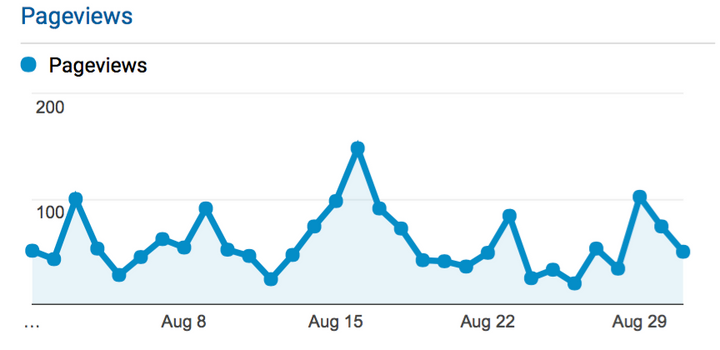
The above list is by no means all the options you have when looking to sell green fees online, but we do hope it gives you some ideas to consider and put into practice. It’s an old adage, but remember that you can only manage it when you measure it, so please make sure you are tracking the number of page views/sessions you are getting to your booking channels, along with the conversion percentages. Once you know these statistics, you can work to improve them! And one of the best ways to improve conversion is through revenue managing the tee sheet!
#OnlineMarketing #TeeTimesOnline #ThirdParties

Read more

N is for Nomads and how to attract them to your golf course…

‘Nomadic golfers’ has a been term heavily used over the past 10 years in the golf industry, and describes the golfer whom doesn’t have a home club as they play a variety of courses.

Over the past 10-15 years visitor golf has become easier to play across almost all golf courses. More & more courses are using some form of electronic tee sheet, allowing visitors to book a tee time over the telephone or via the internet. Third party websites such as teetimes.co.uk have also changed how golfers book, and now account for around 1 million rounds of golf per year, further to that (although a bit of an estimate) we believe there are a further 1-2 million rounds of golf booked online directly with golf clubs.

Online golf bookings will continue to grow 2018, especially at those clubs who have the right strategy in place. It is worth noting that golfers will migrate from booking over the telephone or rolling up at the club to booking online. New golfers coming into the sport will simply expect to be able to book online as they do for everything else in their lives, especially if they are of the younger generation. We already know that the average age of a member is 55+ at most clubs and older at others, so these nomads are key to attracting new golfers to a golf courses, and if they have a great experience they may join right away, or come back in a few years when their personal circumstances allow them to become a member of a golf club.

From working with our partner courses over the past 3 months we can share a number of statistics, which should help golf courses better target nomadic golfers through digital marketing and advertising. So here goes…

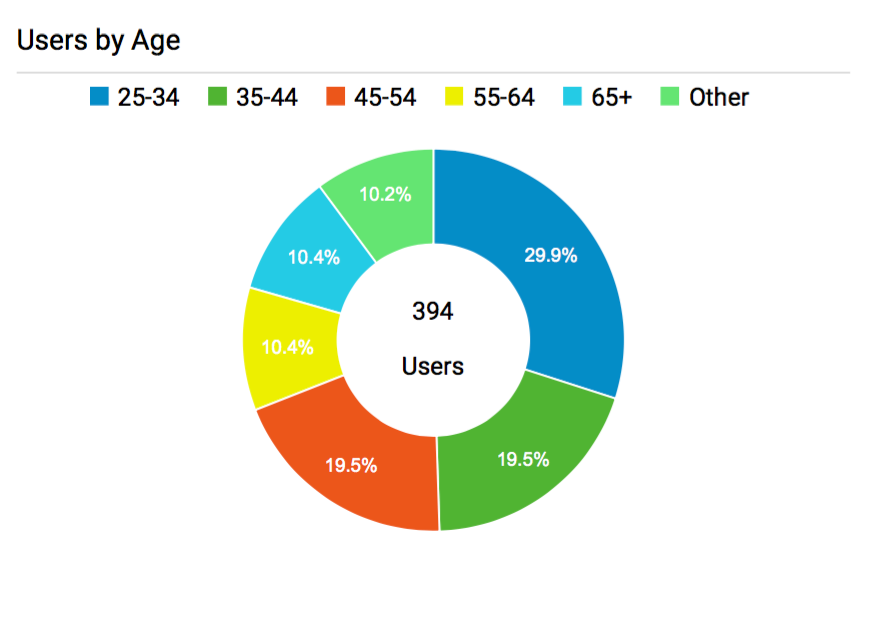
The largest group booking online is 25 – 34 year olds, followed closely by 35-44 & 45-54 year olds. Put simply, these are the age groups to target when using paid digital advertising.

It is also useful to know that most people are searching on a mobile device. However, we believe traffic from a desktop device although smaller as a percentage of total views converts better than mobiles, which may be used to ‘shop’. Having said that as technology improves along with the booking process so will the conversion of each channel (roll on 1 click purchasing). So make sure you consider what devices you are targeting.

It is worth mentioning at this point, that it is up to the golf industry to make the process of booking online as easy as possible for the golfer. One of the reasons for the success of third party websites is the ease of booking process versus the book direct option, which is generally; non-mobile responsive, takes too many clicks to book, difficult to find on the website and doesn’t remember the customer details – if Amazon (potentially the best e-commerce website in the world) operated like this I question whether they would even exist today!

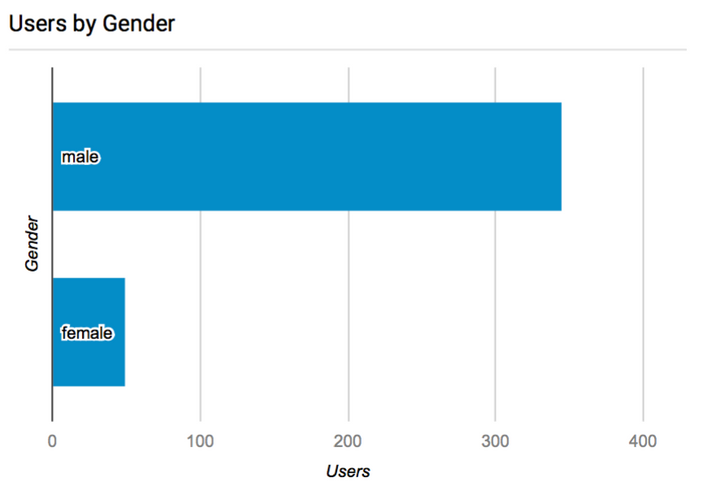
A couple other factors to consider when targeting golfers online are; gender of people searching, where the web traffic is coming from (directly through your website, social media or referral websites), along with the geographical location, the day and time the web traffic peaks (in order to co-ordinate offers that will bring in the most ROI) and bounce rate.

As part of our monthly subscription service (as long as your technology provider can enable Google Analytics) we provide all this information to you. We then use it to maximise the core of our service which revolves around revenue management and dynamic pricing.

As a final point, we have seen anywhere from a £400 – £7,000 month over month increase from using revenue management combined with improving the golfers digital journey. If you are not sure where to start or simply do not have the time to look at this revenue stream, then please do get in touch and we will come to meet with you and offer you a 1 month no strings attached trial

Read more

M is for membership and how it can and should influence online green fees…

  • Sep 3, 2017.     2 min read


It is important to consider your membership when setting an online green fee rate strategy. For a lot of golf courses, members can be the largest income stream and therefore need to be prioritised. A few points we consider when looking at how members affect the online green fee pricing are:

When are members playing the golf course? A lot of golf courses have member only times, but often these are not fully utilised and are in prime revenue generating times. If this is the case, it may be worth having a last minute (24-48 hour) green fee release on any times that are available.

Members guest rates are traditionally a static price. If this is a sticking point then consider flexing the price based on XX% below the lowest rate at that time. It’s also worth highlighting any times where visitors cannot play the course but members can.

Online visitor bookings undoubtedly target a different market to traditional walk-in/over the telephone green fees, and because the customer is booking online you will generally capture the visitor data. Make sure you are re-targeting this data for membership.

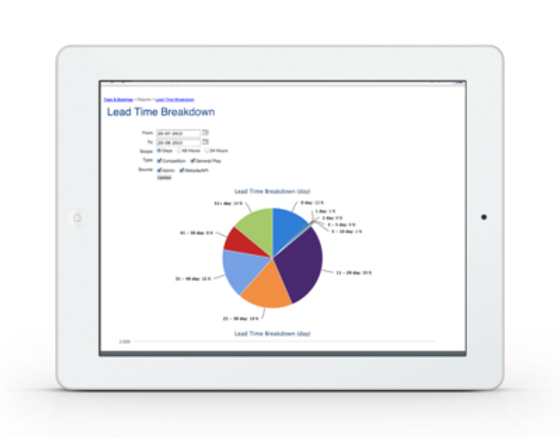
We covered this in more detail in last weeks blog about lead time (click here for more info), but in short make sure your members have longer to book than visitors.

When looking at converting online visitors into members it will be important to have the correct membership category/price point to do this. With that in mind, flexible membership schemes are an extremely useful tool, they can also help you better use your golf course by making certain times better value to play than others. There are external schemes such as PlayMoreGolf which can help you market flexible membership, or you can create your own flexible membership offering – just be sure you have the technology to track when the members are playing as manual intervention can be very time consuming!

In summary, online green fees make up one part of a golf course’s revenue but can be a great way to bring new customers into a golf course.

#Membership

Read more

L is for Lead Time and how it can influence green fee price…

Typically when discussing lead times in golf, we are referencing the time between when the booking is made, and when the golfer tee’s off. Lead time will differ based on season, destination, booking channel, day of week, time of day and other influences. This gives us a lot of factors to consider when dynamically pricing a tee time. If you have the right software, analytics and processes in place, this information can be used to flex rate and maximise REVPATT (revenue per available tee time).

The hotel industry also looks at the search-to-book window, which references the length of time from the first online search until the booking takes place. This is very difficult to track and measure, especially within the golf industry as the technology is not available to golf courses… yet. Although we are not able to reference data on the search-to-book window in golf (due to the lack of it), we can anecdotally look at this, learn from other industries and adjust strategies accordingly.

Whilst writing this article I read a few articles on how to get the best price hotel room to better understand the information available on the search-to-book window. Although it differs from market to market the key points were:

  • Generally between 100 and 14 days before travel rates are relatively static.

  • Don’t book a room 14 to 10 days before travel as this is when hoteliers know last minute travellers are looking to secure their plans, and increase prices accordingly. Note that this works, hence why they do it!

  • If you do not mind what hotel you stay at then wait until 3 – 4 days before travel to book, as hotels will offer there most affordable rates during this period.

  • Don’t hang on to book until 1-2 days before travel – hotels know that any trying to book nees a room, and will increase their prices accordingly safe in the knowledge that urgency will overcome budget for most travellers.


So what does all this mean for a golf course when pricing its green fees? In our opinion a number of factors are worth considering:

  • Booking patterns will vary between customer type. For example, someone looking to book a golf tour at a number of courses, with a hotel stay will want to get things booked up 3 + months in advance. While someone booking a last-minute game with a friend, will likely do so within 48 hours.

  • Group size will influence lead time and the search-to-book window. One of our old adage’s at Teeofftimes.co.uk was 1 & 2 balls book 1 & 2 days in advance, while 3 & 4 balls book 3 & 4 days in advance. That said, this pattern is changing with the increase of mobile bookings, the lead times are getting shorter.

  • Supply of tee times will have an impact on lead times and the search-to-book window. Don’t forget this will change depending on day of week and the time of day being booked. For example Saturday morning will usually have low supply but high demand, therefore the lead time will generally be longer.

  • The available booking window will of course influence lead time. A large proportion of golf courses limit visitor tee time bookings to 14 days in advance and a slightly longer lead time for members, whilst groups/societies can book up to a year or more in advance. The way people book golf is changing, therefore we advocate a more considered strategy in relation to lead time and the search-to-book window overlaid against booking channel. For example, a golf course could consider releasing one or two prime time tee times into the tee time marketplace 30 days out, the course will be able to command a high rate whilst not disrupting play. The revenue impact could be huge with the tee times being worth £100 each, that’s £400 per weekend, multiplied by 20 weekends works out at £8,000 of green fee revenue.

  • Once a golf course understands the way lead times differ for each of its customer types/markets, they can market more effectively to these groups at specific times and increase the REVPATT.

The list could and does go on. The importance of understanding your visitor green fee lead time/search-to-book window by booking channel is growing as the way golfers book evolves. Make sure to consider the factors which have the biggest influence on your green fee’s when setting your rate strategy – or employee The Revenue Club to do it for you!

#Leadtime #Searchtobookwindow

Read more

K is for Killing it on Facebook!

There are over 40 million users of Facebook in the UK, which presents golf course operators with a huge opportunity to reach golfers. The even better news is, the user demographics are ideal for helping golf courses target the age groups which, traditionally have been tough to get and then keep on the course (check out the below chart which shows data from January 2017):

With Facebook being such a powerful tool for targeting 25 – 50 year olds (for both membership and green fees), it is important that a golf course gets the basics right. With that in mind, we have created a check list of the basic things you should be looking at if your golf course is on Facebook:

  • Images: Make sure you have some high quality that are the right size. Its worth checking out this link if you are unsure on image sizing.

  • About us: Be sure to fill in this section as much as possible, and double check you have a link directly back to your website. Include information such as how golfers can get in touch and where you are located.

  • Create a vanity URL: Create a custom Facebook URL like https://www.facebook.com/nameofgolfcourse – it will strengthen your digital brand and make it easier for people to find you.

  • Audience: Use your fans interest to target specific parts of your audience. Base your content on key personas, including demographic, location and interest targeting for organic posts.

  • Buttons: Use a call to action button on your Facebook page. If your booking engine is mobile responsive, use ‘Book Now’. If it is not, consider a sign up (for a newsletter) or call now option. Then go and get a mobile responsive booking engine!

  • Reviews: Enable reviews as they let customers engage in a dialogue with you, plus they let you show off some great ‘social proof’. To activate reviews you need a business listing and a full address.

  • Use rich media in your newsfeed: Bright images of the golf course and video clips will help generate likes, you might even go viral with the right video. There are also new features such as a ‘carousel’ and ‘canvas’ which will help you stand out when people are scrolling their feed – these are great for paid advertising.

  • Make shareable, fresh content: A steady stream of shareable content will benefit your SEO, help golfers engage with your page and increase your reach.

  • Add social sharing icons: add icons to your digital content, this is free and easy if you use something like http://platform.sharethis.com/get-share-buttons. Make sure you have links to your social media on your website too.

  • Look at who your audience is before you invest in paid advertising: For example, you can use Google Analytics to check who is visiting your booking engine/website, and then target similar people based on demographics, location, interests and more! Facebook also has its own tools to figure out who you are best targeting. If you are advertising green fees it may be worth not advertising to people who already like your page.

  • Use paid advertising: Google AdWords may seem complicated but Facebook is simple. It’s a great way to drive web traffic to your booking engine. It will help you sell green fees especially if the pricing is right and you are already tracking your conversion rate.

  • Don’t oversell on every Facebook post: Keep the 80/20 rule in mind. Only 20% should be about your brand, the other 80% should be to sharing content that really matters to your audience.

Thanks for reading this weeks blog!

#Facebook

Read more

J is for Customer Journey…

This week we were struggling to for an idea to write about for the letter ‘J’, but thanks to a brain wave from friend of The Revenue Club, this blog is all about a golfer’s journey to booking a tee time.

Digital Customer Journey

The journey a golfer takes to book a tee time has significantly changed over the past 15 years, primarily due to the internet and mobile phones. Although we have talked a lot about technology, websites and e-commerce in previous blogs, it is important to remember that the customers themselves have changed their behaviour and therefore demand to book a tee time in a different way. The golf industry must adapt to this, and must adapt at a faster rate than it has so far.

The change in booking technology across all aspects of our lives has undoubtedly influenced golfers booking behaviour to change. One of the key changes in the golf industry was the introduction of marketplace websites such as ‘reservatee’ (for those of you remember that platform) and more well-known sites such as teetimes.co.uk & teeofftimes.co.uk, which made it simple to book a tee time as a visitor online.

Comparing how technology has influenced in other industries can help us understand how to adapt and evolve with technology changes. Fifteen years ago having a map in a car for directions was common place, now with the introduction of Google Maps on mobile technology and satellite navigation, it’s rare you see anyone using a paper map to find their way. Looking to the future, Tesla are rapidly changing consumer behaviour by introducing new technology. Their cars are fitted with what I would describe as a massive iPad (I think Tesla call it a Control Panel), which has replaced the traditional centre console and helps the car to self-drive. Whilst I love talking about cars, my point is that technology changed and is evolving, which in turn changed consumer behaviour and will continue to do so in the future – soon enough we will all be passengers in cars, not driving them! (There was a pun in there somewhere about car journey and customer journey but I just couldn’t bring myself to write it!)

At The Revenue Club we always like to ask the question, ‘so what’? Well, as the change in consumer behaviour has been driven by evolving technology, this means golf courses must adopt new technology and adapt the way green fees are marketed and sold. Any golf club encouraging visitors to play will significantly benefit from a mobile responsive booking engine, utilising revenue management/dynamic pricing, whilst implementing digital marketing tactics, such as SEO (organic search engine optimisation), SEM (generally paid search engine marketing such as Google AdWords) and proactive work on social media (paid & organic) – all things we can help with through our monthly subscription service.

Golf course operators also need to be aware of potential customer objections from new strategies, and how to handle them. One of our partner courses had recently been challenged by a golfer about the price they paid at the time of booking, versus what price was available online 20 minutes before the tee time (the tee time was booked around 3 weeks before the day of play, over the telephone, and no deposit was taken). The manager handled the objection by using an example from the hotel industry, he asked ‘if you had booked a hotel 3 weeks prior to arriving over the telephone, would you have arrived at the reception, checked the price online, then asked to pay that rate?’. This of course, was delivered in a friendly non-challenging manner, and the golfer then said, ‘fair point’, paid the money and enjoyed the rest of their day, probably thinking nothing more about it. In virtually all other industries customers are aware that the price they pay will flex based on a number of factors, including when and how they book. We as an industry need to make sure customers are educated and understand this. In this example, it is also worth noting that if you were to reserve a hotel room, pre-payment or a deposit would be the norm, this is generally not the case in golf.

Not only is the way golfers book changing, but also the time they book. Because of technology golfers can book 24/7 meaning bookings are coming in out of hours, and on a much shorter lead time. Whilst at Teeofftimes.co.uk we learnt that the average group size of an online booking was around 2.3 golfers per tee time and that around 70% of bookings were made within 48 hours of play. One of the reasons for shorter lead times is down to the mobile telephone, communication is now so easy, from creating groups in WhatsApp to booking on the go – this makes organising a round of golf quick and easy, influencing a more last minute tee time booking (not to mention the good old British weather).

If you would like to learn more about your digital golfer customer journey then please do get in touch.

#CustomerJourney

Read more

I is for Images…

Think about when you book a hotel online or a holiday, one of the first things I do (and I’m guessing you are the same) is check the images of the room/facilities. If they are of poor quality (grainy) or poor images, then I will generally move on to the next hotel.

Images are an important factor when advertising green fees online. Ultimately the customer wants to see what they are buying. This is particularly true in the online green fee market due to a large portion of this market being transient, and therefore the golfer may have never played your course before. Good images can provide a reason to stay on a webpage for longer and will help increase the number of site visits that turn into bookings, they can also differentiate you from your competitors.

Getting professionally created photos is a ‘must’ for all golf courses advertising online, and with today’s technology the results can be spectacular. Images are particularly important when selling higher priced green fees – generally the higher the price, the more a golfer will consider the decision to buy and images can be that deciding factor.

Once you have got a good base of professional images it is important to supplement them with seasonal shots, and by seasonal I do NOT mean a golf course covered in snow! Instagram is a great tool for turning a photo taken on your phone into a great looking image through the various filters available and its free! Instagram is also a great for building your social following. Often the best images can be taken around sunrise or sunset at a golf course. Most green keepers are around at one or both of these times and can therefore be a great option for taking on the golf course’s Instagram account!

Finally, thanks to The Astbury and Craig Brown for use of the images!

Read more

G is for Google & Golf Tours…

This week I wanted to talk about Google and how it can influence the marketing of a golf course online, with a particular focus on selling green fees. We also take a brief look at Golf Tours, how this can influence your long lead time green fee strategy and our pals over at Golfbreaks.com.

Firstly Google… I am going to focus on two particular areas of Google today, Google AdWords and Google Analytics. I believe both of these tools are under-utilised by almost all golf courses in the UK. Conversely these tools are used very well by third party tee time resellers such as Teeofftimes.co.uk, Teetimes.co.uk and GolfNow.com. We want to make it clear that the individual course can use these tools to drive digital tee time sales, but before we talk about how we do that lets look at exactly what Google AdWords and Analytics are…

Google AdWords is an online advertising service, developed by Google, where advertisers pay to display brief advertising copy to web users. Google AdWords’ system is based partly on cookies (information stored on your computer about your browsing history) and partly on keywords determined by advertisers. Google uses these characteristics to place advertising copy on pages where they think it might be relevant. Advertisers pay when users divert their browsing to click on the advertising copy. In marketing speak it can also be referred to as PPC (pay-per-click) however, note that Google AdWords only exists within Google’s Network, not on search engines like Bing. It is also worth noting that Google is by far the most popular search engine.


Google Analytics is a free web analytics service offered by Google that tracks and reports website traffic. Google launched the service in November 2005 after acquiring another business. Google Analytics is now the most widely used web analytics service on the Internet.

So what do these tools mean for me and how can they help me sell my green fees online? (I hear you ask). Well in short, Google Adwords can help you drive more traffic to your tee time booking engine, and as long your conversion percentage (lookers to bookers) remains steady and the ROI from the ad spend is there, then keep using Google AdWords. Google Analytics on the other hand is the tool you can use to understand where the website traffic comes from, and what the demographics of those visitors are, allowing you in turn to measure the impact of any marketing activity and become more targeted with it.

The Revenue Club are both Google AdWords and Google Analytics certified, so if you want to increase your digital green fee income then please get in touch. It is worth noting that Google AdWords is only a tool we would employ once we have a full understanding of your organic web traffic and how your booking engine performs.

So on to Golf Tours and our friends over at Golfbreaks.com. Golf Tours are becoming more popular among golfers, in essence a golfer will stay in a city centre hotel (within walking distance of the bars etc) and then play multiple courses in one area normally ticking off a couple of ‘bucket list courses’ on the way. Golfbreaks.com as a tour operator are helping golfers take the admin out of booking a golf tour and they are using technology to make this process easier. From a golf courses viewpoint booking in groups of golfers (usually between 4 – 12) is a great way to secure a higher/rack green fee rate 1 – 6 months in advance. Please get in touch with us if you would like to learn more.

Thanks again for reading, I hope you are enjoying The Open and please pass this blog on to anyone who you think will be interested.

#GoogleAnalytics #Golfbreakscom #GolfTours #GoogleAdWords

Read more

F is for Funnel (of the digital marketing variety)..

When considering what to write for ‘F’ in our A-Z digital green fee golf blog, I came across this great infographic depicting the digital marketing funnel. For me, this concisely explains the journey a customer takes when buying a green fee online.

So, what do the stages mean in relation to selling a green fee online?

Exposure – all marketing funnels start with awareness/exposure as without it golfers wouldn’t know about your course! Digital adds another option to your marketing arsenal and can be particularly effective when selling a product/service such as a green fee. We covered the various types of this in our ‘D is for Digital’ blog if you want a refresher.

Discovery – this is all about the customers first few visits to your website. Consider if they are finding the right content for them and on what device they are viewing your website. For example, someone looking to book a green fee does not want to make 4 or 5 clicks, before they see the availability or pricing. It’s also worth considering whether you should display your pricing before the customer views the availability, particularly if you are using revenue management to price your tee times, meaning price will change from hour to hour! (Of course that only works if you have a visitor booking engine – and I’m guessing you do if you are reading this blog).


Consideration – this is where the customer is deciding whether to buy a green fee or not. This may involve getting in touch with other people to check availability etc.


Conversion – this refers to whether or not somebody buys the green fee and is possibly the most important statistic of all. Price and therefore revenue management will play a large part in whether a golfer ‘converts’ into a customer, weather and other factors will also have an influence. All of these factors should affect the price of your green fees. Conversion is usually displayed as a percentage. Remember if the conversion rate is high then it will be important to understand why, and it is likely you should increase your green fee rate at the times where most of the green fees are being booked.

Retention – make sure you are capturing as much information about the customers who book and play. The idea is to feed them back into the top of the funnel, so make sure you capture their email address. Once you’ve got it you can then use bounce back vouchers/codes to get them back in the funnel.

Finally, monitoring is key to optimising your digital marketing funnel. This means assessing your success and understanding the metrics that highlight any problems in your digital funnel, then rectifying them. For example, are you getting enough traffic to your green fee booking engine. If the answer is no, then you could improve your SEO or look at paid advertising through social media or Google AdWords. As always if you want to learn a little more about how to effectively sell your green fees online then please do get in touch.

#onlinegreenfees #DigitalMarketingFunnel

Read more

E is for email…

 
Email marketing

Email marketing has been around for longer than you would think. In 1978, 7 years after the first email was sent the first mass marketing email was sent promoting DEC computers. Email therefore pre-dates virtually all other types of internet marketing and its been around since then because it works.

According to Experian, for every $1 spent on email marketing, $44.25 is the average return on investment, elevating it head and shoulders above any other form of digital marketing. So, if you are not doing regular email marketing or want to improve it here are a few tips (alternatively you could just employee the services of The Revenue Club if you are a golf course operator looking to get more from digital marketing – apologies for the plug):

  1. Analyse – in last weeks blog we discussed digital marketing in general and the importance of analysing the impact your digital marketing has. Email is one of those formats and you can measure every aspect of an email marketing campaign e.g. open rate, CTR’s (Click Through Rates), conversion rates etc. This will allow you to better tailor your emails and make them more effective over time.

  2. Conduct surveys – you can use email marketing to directly ask customers about their needs, views and opinions. This is perfect for member survey’s as most golf courses are likely to have an email for most of their members. And why not pick a few visitors and send them a survey about their experience, they may even share a few of their ideas on how to improve things – I’m sure your members will in their survey!

  3. Combine email and social media – Email to an extent is a numbers game just like any other form of marketing. If you have 100 subscribers and an open rate of 1% then that means 1 person will open your email. You can build your email subscribers in a number of ways; try sharing links to ‘subscribe’ on your social media or running a competition for those subscribing and promote it via social media. Also make sure you offer the option for people to share your email on social platforms.

  4. Get creative – think beyond a bit of news, add pictures about the new bunker going in, run a competition for the lowest score from a visiting golfer. In short, do something different that will make people want to share your email and interact with your course.

  5. Segregate your database – make sure your database is segregated in whatever email tool you are using, its no use sending green fee offers to members!

So in summary, Email remains one of the most important digital marketing channels there is. Even in this age of social media mania, 91 percent of all email users worldwide check their emails at least once per day!

Read more

We are here to assist